What Is the Three Component Aim Planning Process for Developing Influential Messages?
Respond to the following with one to three paragraphs foreach.
- Discuss basic considerations in the audience analysis stage ofplanning messages.
- Describe the nature of framing for business messages.
Here's a source to help get started
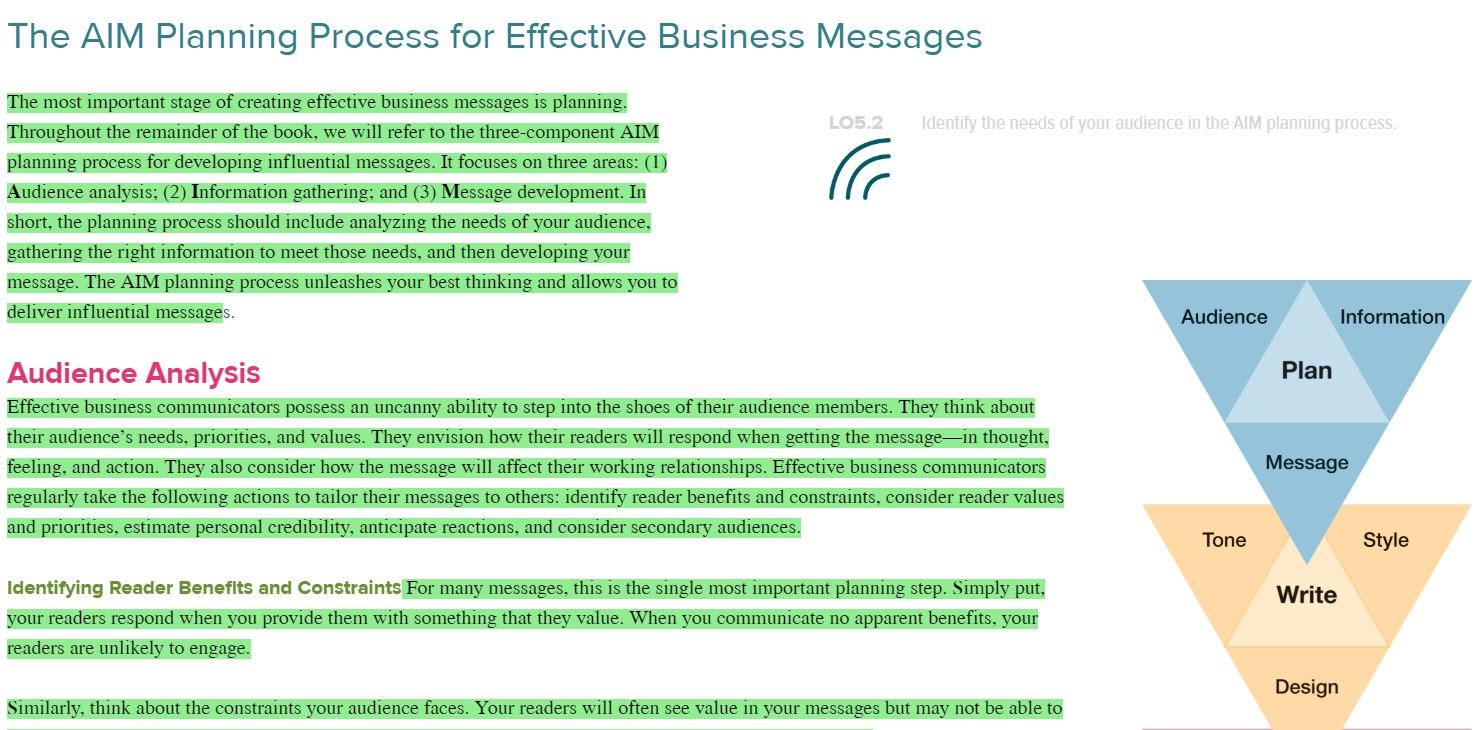

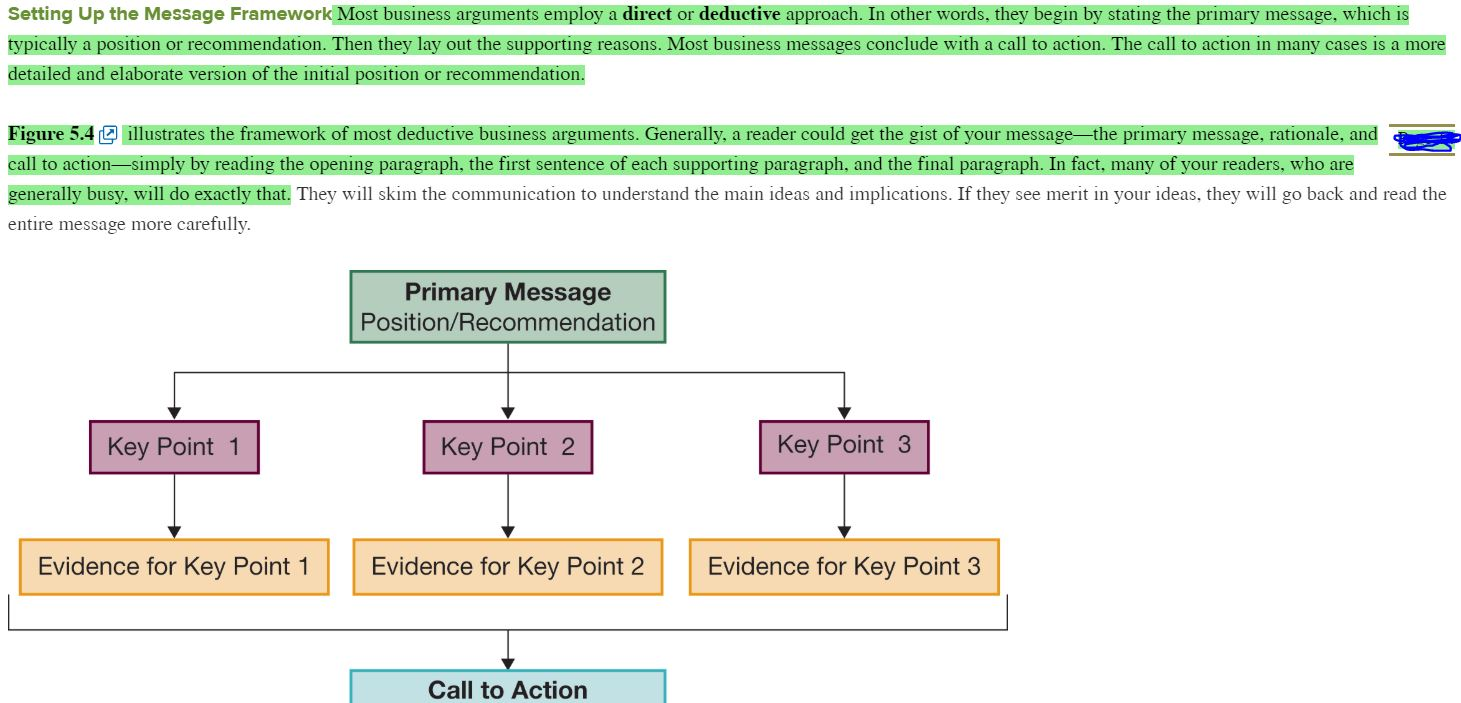
The AIM Planning Process for Effective Business Messages LO5.2 Identify the needs of your audience in the AIM planning process. The most important stage of creating effective business messages is planning. Throughout the remainder of the book, we will refer to the three-component AIM planning process for developing influential messages. It focuses on three areas: (1) Audience analysis; (2) Information gathering; and (3) Message development. In short, the planning process should include analyzing the needs of your audience, gathering the right information to meet those needs, and then developing your message. The AIM planning process unleashes your best thinking and allows you to deliver influential messages. Audience Information Plan Audience Analysis Effective business communicators possess an uncanny ability to step into the shoes of their audience members. They think about their audience's needs, priorities, and values. They envision how their readers will respond when getting the message in thought, feeling, and action. They also consider how the message will affect their working relationships. Effective business communicators regularly take the following actions to tailor their messages to others: identify reader benefits and constraints, consider reader values and priorities, estimate personal credibility, anticipate reactions, and consider secondary audiences. Message Tone Style Write Identifying Reader Benefits and Constraints For many messages, this is the single most important planning step. Simply put, your readers respond when you provide them with something that they value. When you communicate no apparent benefits, your readers are unlikely to engage. Design Similarly, think about the constraints your audience faces. Your readers will often see value in your messages but may not be able to Considering Reader Values and Priorities Being an effective business communicator requires that you learn about other people—what they value, prioritize, and prefer. Values refer to enduring beliefs and ideals that individuals TA hold. Because values are at the core of belief systems, appeals to an individual's values can have strong influence. Generally, people hold workplace values-beliefs and ideals about the appropriate way to approach business problems, resolve issues, and choose goals. Priorities involve ranking or assigning importance to things, such as projects, goals, and tasks. Priorities tend to shift more often than values. Estimating Your Credibility As discussed in Chapter 1 q. your readers will inevitably judge your recommendations, requests, and other messages based on their view of your credibility. If your credibility is low, consider how to strengthen your message in ways that overcome your lack of credibility. Many entry-level professionals face this situation, they have relatively low professional credibility because they are viewed as the newcomers. Establishing a professional reputation takes time. It takes less time, however, if you stay aware of your strengths, weaknesses, and goals. Most important, your reputation depends on adding value in the workplace. Yet, overcoming a reputation as a newcomer isn't easy. Changing your reputation will likely take at least six months. To break out of a reputation as an inexperienced newcomer, consider the following options: . Set up a time to talk with your boss. Explain your growth in various areas and ask for his/her ideas about improving your professional reputation. Ask your boss if you can take on any higher-responsibility projects. • Make sure you fit in with the corporate culture in terms of professional dress and communication style. • Attend a lot of meetings to get to know as many colleagues as possible. Participate appropriately. • Create a professional blog about a niche area. Anticipating Reactions In the planning stage, envision how others will respond to your message. Imagine how your readers will think, feel, and act as they read it. Always think about what you want to achieve in terms of workplace relationships. Most business activities cannot be separated from the web of working relationships involved. Sometimes your positions or ideas may displease others. In these instances, consider how you can articulate your views most constructively. Latisha believes that Jeff will respond sensibly to a clearly articulated, logical justification of the wellness center. Based on the strength of the cash flow estimates, Latisha thinks he will respond favorably. Even if he disagrees, she assumes he will respect her hard work and reward her with challenging assignments. Keeping Secondary Audiences in Mind In most situations, you should anticipate that individuals other than your primary recipient will view your messages. In some cases, you will distribute your message to additional individuals whom it will affect. For example, you might copy team members on a correspondence between you and a client so that they are aware of project progress. In other cases, your primary recipient will forward your message or otherwise share the information with others. You should consider which secondary audiences will view your messages and, if necessary, modify them accordingly. Message Development Components Fame the primary message, Set up the structure and logic of the message. Framing the Primary Message Framing involves showcasing a message from an overarching theme. It focuses a reader or listener on a certain key idea or argument and highlights the premises and support for this key idea or argument. As one management communication expert said, "No communication skill ... is more critical to the manager than the ability to frame an issue effectively.'25 Your job in framing the message is to help your reader see the issue from a strategic perspective. Just as a frame draws out particular aspects of a painting, the frame you apply to your message can create a unique prism through which your audience will read. Strategic communicators consider alternative frames before they settle on the one that will be most compelling. Ideally, it should be a vivid statement with rational and emotional appeal. One standard you'll encounter frequently in this book is whether a reader would remember the frame later. Regarding your frame, ask questions such as the following: Will readers remember my primary message two hours from now? What about in two days or two weeks? Will this frame make readers more likely to support my call to action? The art of creating effective frames involves capturing your primary message in a short, memorable statement of 15 words or fewer. Eduardo Castro-Wright, former president and CEO of Wal-Mart Stores USA, discussed this strategy in the context of organizational communication: "We have a very clear view of what we do for consumers around the world. And we can describe our complete strategy in 10 words. And that makes it very easy to get everybody energized and aligned." Setting up the Message Framework Most business arguments employ a direct or deductive approach. In other words, they begin by stating the primary message, which is typically a position or recommendation. Then they lay out the supporting reasons. Most business messages conclude with a call to action. The call to action in many cases is a more detailed and elaborate version of the initial position or recommendation. a Figure 5.4 illustrates the framework of most deductive business arguments. Generally, a reader could get the gist of your message —the primary message, rationale, and call to action—simply by reading the opening paragraph, the first sentence of each supporting paragraph, and the final paragraph. In fact, many of your readers, who are generally busy, will do exactly that. They will skim the communication to understand the main ideas and implications. If they see merit in your ideas, they will go back and read the entire message more carefully. Primary Message Position/Recommendation Key Point 1 Key Point 2 Key Point 3 Evidence for Key Point 1 Evidence for Key Point 2 Evidence for Key Point 3 Call to Action
What Is the Three Component Aim Planning Process for Developing Influential Messages?
Source: https://www.assignmentaccess.com/ExpertAnswers/respond-to-the-following-with-one-to-three-paragraphs-foreach-discuss-basic-considerations-in-the-au
0 Response to "What Is the Three Component Aim Planning Process for Developing Influential Messages?"
Postar um comentário